
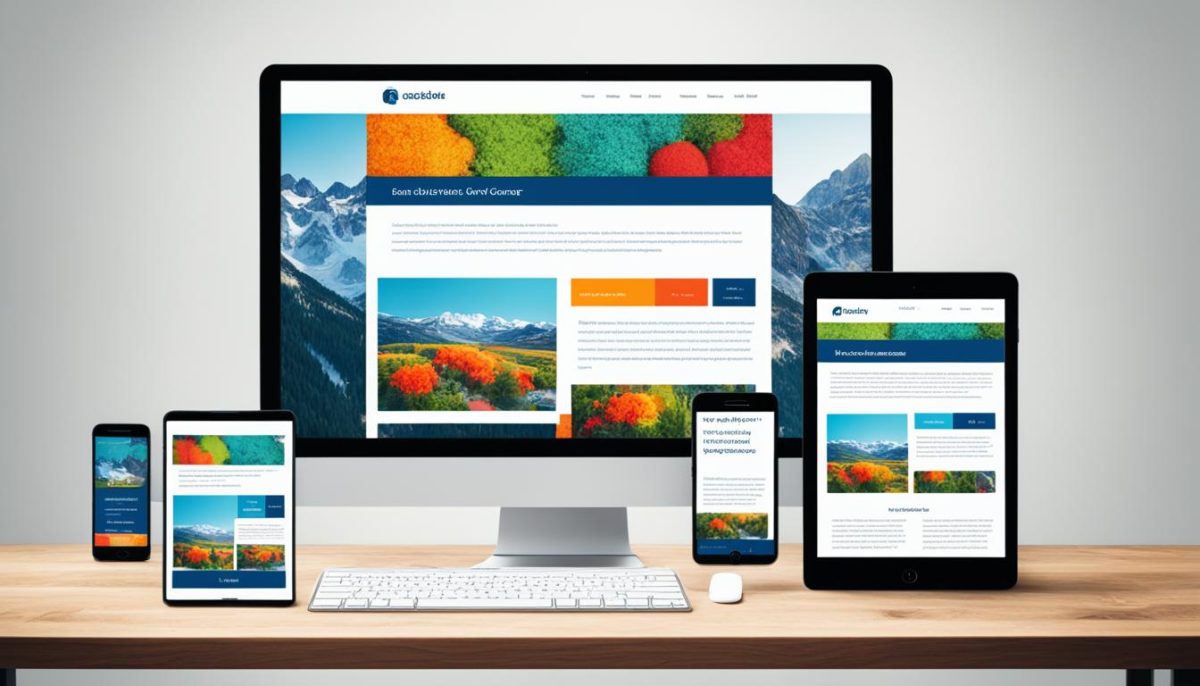
Category Archives: Agency Tools

Accenture recently oversaw a Mobile Web Watch survey to determine the marketing implications of a new generation of constantly connected mobile Internet users that primarily access the Internet through mobile devices. Users are now more focused on having a strong Internet connection from their service provider, which will affect consumers’ purchasing power and the type of mobile consumer your company targets. From findings of the study, four key trends stand out among digital consumer’s behavior that players in industries such as telecommunications, media and technology along with those in other industries like retail, utilities or automotive need to pay attention to:

  1. Smartphones are emerging as the most popular mobile device to use Internet among mobile Internet users in the past year.
  2. Emailing, social media and instant messaging is growing rapidly among mobile Internet users.
  3. The consumer is now more willing to both pay for premium mobile services and use their mobile device to pay bills.
  4. Network quality and coverage is significant in how the consumer experiences and utilizes the Internet on their mobile device.

The Accenture Mobile Watch survey, 2012, highlights the need for companies considering taking their marketing message mobile, to focus on development as the mobile Internet market emerges. Remember, the hyper-connected consumer’s preferences and needs are already transforming operating models and IT infrastructure. Such organizations are making use of mobile and cloud-based technologies to keep pace with the demand for new and improved capabilities, as consumers increasingly use smartphones and tablets for online commercial transactions.

As a digital marketer serving a range of clients, you typically have access to their website traffic data. We’ll show you how to use Google Analytics and some segmentation filters to identify which of your customers might be receptive to a discussion about mobile solutions in less than five minutes.

This post is an update to one we did in August of 2011 (Using Google Analytics to Understand Smartphone User Behavior) where we looked at some Google filters to identify Bounce Rate differences. Since Google has made some changes, we can accomplish the Bounce comparison and much, much more. You can use this technique with any websites that have Google Analytics. Once you set up the Segmentation filter described below, you can re-use it throughout all the sites – a major time savings.

Step 1 – Log into Google Analytics. Choose a website and elect the Standard View. Ensure that in the left column you have Audience > Overview selected and that you see the Visitors Overview.

Step 1 – Log into Google Analytics and get to the Standard View and the Audience > Overview. The display should look something like this.

Step 2 – Create a Custom Segment that will only show non-mobile traffic. Click the Advanced Segments button (A) and then click the Create Custom Segment button (B). In the Edit window give the Segment a Name (C) (e.g., Non-Mobile). Change the drop-down (D) from “Include” to “Exclude” and then select “Mobile (including Tablet)” from the green drop-down (E). Make sure the drop-down (F) is set to “Containing” and type in the word “Yes” into field (G). Save.

Starting to set up the Custom Segmentation

Setting the detailed parameters to complete the Custom Segementation

Step 3 – Compare desktop and Mobile Traffic. Click Advanced Segments again (H) and select “Mobile Traffic” (I) from the list of Default Segments. Click Apply (J).

Setting up the Segmentation so both filters are applied.

Now you have two segments that enable you to quickly compare desktop to mobile visitor behavior. So what should you look for?

The first stat to look at is the percentage of each traffic type. This is listed for the two segments just under the Visitors Overview. In this example you can see that desktop (non-mobile) traffic makes up 74.45% and mobile is 24.55%

The resulting report clearly shows the difference between Mobile and Non-Mobile visitors to the website.

An 8 point percentage in greater Bounces for Mobile traffic indicates a significantly higher number of visitors are immediately leaving this site.

The second stat to look at is the Bounce Rate. You want to compare the rate between desktop and mobile. At differential beyond 5 percentage points is significant.

Both of these stats give you an idea if the visitor behavior makes this client a good prospect for opening the discussion about a mobile solution. It’s important to look beyond percentages and translate those into actual unique users. For example, ask yourself “Does this client want to turn away 55,000 (the number of unique visitors) customers a month due to a poor mobile web experience?” Expressing the user experience in terms of customer behavior helps make the numbers come to life in terms any client prospect should understand.

Now that you have the filters and know how to interpret the results, it’s really a simple matter to go through client websites and locate the most likely prospects. What’s more, it is a win for them and a win for you.

For those of you that enjoy exploring the various culinary creations that your town or city may have to offer, you undoubtedly know what it’s like to read a rave review about a restaurant, only to find dead ends when trying to call or locate their establishment. If you’re a restaurateur, you perhaps know how important a mobile marketing strategy can be in enticing new cuisine enthusiasts.

A new study by xAd and Telmetrics, reports that the restaurant is the fastest growing mobile search category among smartphone owners. It is more local and urgent than categories such as auto and has a nearly 90% conversion rate. This Path-to-Purchase study found that smartphone restaurant searchers have the most urgent opportunities, with 64% converting immediately or within an hour of their mobile search.

Make your restaurant the “local’s spot”.

For those neighborhood consumers looking to grab some grub, there is every indication that mobility, proximity and communication lead to high engagement and conversion rates for local searches. Given the nature of a mobile handheld device and the immediate results it’s capable of producing, it’s reported that 65% of users who search for local restaurants using a smartphone are looking for locations that are within walking or driving distance, while 70% are looking for a business location and just over 50% are looking for a local phone number. From this, perhaps the most important piece of information restaurateurs need to focus on is how easily a smartphone user can call your restaurant, thereby increasing the chance of securing their business.

“Ensuring that consumers have easy access to restaurant phone numbers – whether individually-operated or the local franchise – is key to not only securing the mobile consumer’s business in the last phase of their purchase path but also for advertisers to be able to measure mobile traffic and monetize the leads generated.”
– Bill Dinan, president of Telmetrics

The point is, you don’t want to spend time crafting a meaningful mobile message and website just to have the consumer give up when they can’t find a number, make a call or reach a live person through the telephone. It’s important to maintain your smartphone marketing practices, but realize that consumer habits change across devices.

The purpose of reaching out through mobile.
Underscoring the great opportunity in mobile to acquire new customers by way of effective marketing, the report found that 75% of smartphone users notice mobile ads. These are the customers that are most likely to engage with ads that are related to something they have recently searched for, or with establishments that are within walking or driving distance of their current location. When advertising for mobile, it is important to keep in mind which consumer habits favor the more effective smartphone.

Smartphone owners tend to utilize 3 main functions when deciding where to eat—calling the restaurant, getting directions and looking up locations. A desktop or tablet computer’s large size and lack of data connectivity for example, can interfere with your site’s accessibility. On the other hand, an easy to find phone number or directions on a mobile optimized website can help a potential customer find your restaurant immediately.

Full tables, full stomachs, & full registers.
Whatever your goals may be for drawing in that new appetizer aficionado, 3 course connoisseur or desert disciple, make sure that your mobile web presence is just that—a mobile presence and not a desktop formatted site—and you will see an increase in visitors at your restaurant. At almost a 90% conversion rate among hungry smartphone owners, it confirms that restaurants need to go mobile to maintain full tables, full stomachs, and most importantly, full registers.


Over the next few weeks, we’ll be rolling out a series of definition blog posts, where we discuss one aspect of the mobile web and how you, the marketer, can use it effectively for your clients. Today’s topic: mobile landing pages. Stay tuned for more.

This is a good example of a mobile landing page. It has clear navigation, eye-catching design and buttons that lead to actionable content.

Mobile landing pages are the first thing a user sees when he or she visits a site on their phone’s browser. A mobile landing page is essentially your home page — but on mobile it has to be more refined than your regular desktop home page. First it should be attention-grabbing and have clear access to information. Easy navigation is key.

Second, it should help direct consumers to actionable content. For locally owned establishments (or any retail location), that means open hours of operation and directions. Also for retailers, having an image of the product is handy, especially paired with a link to buy it. Also an effective mobile landing page should have links to contact information, including click-to-call or click-to-email buttons. The goal is to get visitors to take action as quickly as possible — because often, you don’t have much of their time.

The landing page should also reflect the company’s branding, with colors and a layout that matches the desktop site and general brand aesthetic. Grab the hex codes from your client’s desktop site and implement them into the buttons, background and text of your mobile site. Also match images and logos between mobile and desktop.

If you’re doing any QR code marketing, you must have a mobile landing page. No exceptions. A user who scans a QR code will do so on his or her phone, so you must optimize that experience by providing a mobile-friendly landing page. Make sure your mobile landing page reinforces an action you want a user to take when they scan a QR code. Help them compare the features of products while shopping or get information at point of sale. With QR codes you can allow users to sign up for a discount program or get information about an exhibit at a trade show. Make sure your mobile site supports “in the moment” use.

Stats from Google's GoMo intitiative.

Discovery is half the battle when it comes to promoting your clients. How can people interact with them if they can’t find them? You already know how important it is to market for Google searches (SEO is king, right?), but do you know how to market them for mobile Google searches?

Currently, about 98 percent of mobile searches are done on Google. However, only 20 percent of websites are optimized for mobile. That means that nearly 80 percent of google results on a smartphone go to a desktop site instead of a mobile-optimized site.

Likely, a consumer will turn to the Internet first to look for your client’s business — not an app store. And, unfortunately, the native app probably won’t show up in the top results of a search. So from a discoverability standpoint, you’ll want a mobile web presence in addition to (or in lieu of) a native app.

If you want people to discover your clients on Google, you’ll want to implement a mobile strategy — bring it to your clients’ attention that this is necessary to connect with their consumers. Explain to them that they should be easily discoverable on Google and provide an enjoyable mobile-optimized experience to keep users on their site. Explain to your clients that it’s in their best interest to provide a good mobile experience to consumers, because not only will they retain visitors for longer periods on mobile, but those visitors are likely to take action by connecting with or purchasing from your client.

Luckily, you can easily prepare your client’s mobile presence by building a site with Mojaba. Mojaba sites look and feel like apps, but they show up in Google searches — and they’ll keep users engaged with websites designed for their phones. Best of all, it’s a good price for you, and it works across all operating systems.

Click here to learn how Mojaba can best serve your clients.

[image via HowToGoMo]

The iPad 2 and Kindle Fire


Over the holiday there was a tablet explosion: Pew is reporting that in mid-December, tablet owners made up 10 percent of American adults. In mid-January, tablet owners amounted to 19 percent. That’s double the amount of people using the device in only one month. This shift is due in large part to the emergence of the Kindle Fire, which runs for only $200 (much lower than the iPad’s $500 pricetag).

Though tablets are mobile devices, Mobile Marketer says they fall somewhere between a PC and a smartphone —which makes us think marketers should design differently for them:

“A Web site that sings on a smartphone screen will be too simple for a tablet, but a Web site designed for a PC screen and a mouse-driven pointer will likely be too detailed for the tablet user, who will have trouble “clicking” on small links with her fingers.” —Mobile Marketer

That’s the reason we don’t let our mobile detection code take tablet users to Mojaba websites — instead, we keep tablet users on the desktop site. A tablet user can navigate a desktop site better than a smartphone user, and a Mojaba site won’t give the best experience to a tablet user (though it does “sing” on a smartphone screen).

Another important difference between tablets and phones is that tablets are leisure tools, not on-the-go search machines. While smartphone search grows steadily throughout the day, tablet use peaks between 6pm and midnight, when people are often at home relaxing after work.

There are, however, similarities in designing for tablets and smartphones — and Mobile Marketer recommends using web apps (instead of native apps) for tablets for some of the same reasons we recommend them for smartphones. If you’re considering a tablet design, keep these ideas in mind:

  • They need to be Flash-less. Apple doesn’t support Flash at all. And though some Android devices support Flash, it is generally acknowledged to be an unsatisfactory experience — and it depletes your battery life.
  • Web apps work cross-platform. Now that the Kindle Fire (an Android device) is a major player in the tablet arena, there are multiple operating systems to contend with. Web apps eliminate the need to design a native app for each of them.
  • Tablet users spend more time in Web browsers. Tablets are tools for surfing, reading and play — not work. According to Google survey posted on Mobile Marketing, 43 percent of respondents spend more time with their tablet than with their desktop or laptop and use them to access mainly leisure-based content.
  • Tablet features are different than desktop/laptop features. Tablets make good use of HTML5, location features, touch screens and multiple cameras. These features make tablets feel different (often more dynamic and interactive) than a computer. Designers can create functions and services for a tablet audience that are lost on desktop computer users.
  • Adjust the accessibility of your site to accommodate what tablet users want. Make the most useful (er, leisure-friendly) information most easily accessible, like product lists, services or fun content.
  • Keep it quick. Don’t make tablet users wait for lengthy load times. Give them fast information, or they’re likely to move away from your site.
  • Make it feel like an app. Mobile Marketer says this keeps their attention longer — and since Mojaba sites look and feel app-like for that reason (and because they’re more navigable), we don’t disagree.

[Image via gadgetcage]

torsion mobile qr code

Reportedly, half of smartphone users have scanned a QR code in their day. That’s a fairly predictable stat. But  what’s more impressive is how consumers use QR codes to make a purchase is impressive:

18 percent of QR-code shoppers make a purchase after scanning a QR code.

QR codes have been dismissed for a few years as that new technology that isn’t quite reaching its full audience potential yet. But that seems to be changing, as more people buy and use smartphones —and as QR codes have cropped up absolutely everywhere. (Although Mobile Commerce Daily reports that only 21 percent of smartphone owners know QR codes by name). Over 70 percent of QR code users find them easy to use — and that’s impressive, considering most folks don’t even know what they’re called.

The other impressive stat is that only 41 percent of people who use QR codes found the information to be useful. Often times, QR codes don’t lead to mobile-friendly websites, which can cause a user to abandon a site shortly after scanning.

QR code growth and a vast pool of sites to optimize for mobile is good news for marketers. There’s huge potential to make use of QR codes for your clients — as long as they lead to mobile-optimized websites. Marketers can help their clients use new technology to rake in business with a sleek and effective process (and by building stunning mobile sites).

Mojaba websites make a great user experience on mobile — especially when they’re accessed via QR code. The end user has an enjoyable experience by first scanning a QR code (let’s face it — scanning is fun). Then they’re taken to a site that is easy to navigate and visually pleasing. It’s made custom for their mobile device. Then maybe — just maybe — this visitor will be part of the 18 percent who makes a purchase.

Mojaba QR Code Selections

Mojaba automatically creates QR Codes for the mobile website and all panels. Download them to use with printed materials, brochures, point-of-sale and other contexts.

To see how your client’s QR code could lead to a mobile-friendly Mojaba site, sign up for our Beta program.

Making maps in Mojaba is easy — and useful. Some mobile web developers will say you need to do something complicated to get a map on your mobile site: Make a layout, save the image on your desktop, upload the map as an “image element,” link it to the location’s address in Google Maps and …

We think that’s too complicated.

So we made it simple to mark locations on a Mojaba site — just enter an address.

Specify your client’s address in the Locations tab of the Mojaba dashboard, then link the location to a client’s site. After that, you can drag the location element onto your mobile site’s contact page (or any page you want — we don’t discriminate), and your map is ready to go.


Best Use for Maps and Locations on Your Clients’ Mobile Websites:

  • Use locations to direct visitors to a “nearest open” location. Consumers searching on their phones are highly motivated and action-oriented — so why not direct them to a location that’s open for business? Help local consumers find your client’s business by offering easy-to-find maps linked to hours of operation.
  • Make it interactive. Visuals are great — but an interactive map lets a user see a location in context — as in, he knows where he is in relation to the business. Users are well-used to navigating a map by dragging and zooming to navigate the area digitally. Let them do this on your client’s mobile site.
  • Give directions. A dot on a map will tell consumers where to go — but not how to get there. Include a button on your map page that pulls up directions. Again, give consumers something to act on, and ensure their action benefits your clients.
  • Offer a phone number. This is another actionable feature that connects consumers with your clients. Google reports that 61 percent of users call a business after searching. Even if a consumer is on his way to your client’s business, he may have questions in transit. Make sure he can easily make a phone call. Include click-to-call buttons and one-touch dialing to streamline the process.

Conveniently, all of these best practices are included in Mojaba’s location features. Sign up for Mojaba’s Beta testing to see for yourself.

You can sign up for the Mojaba Pre-Launch Program today. Just go to the entry form to sign up!

In December, Mashable talked to Jesse Haines, group marketing manager for Google Mobile Ads, who said that only 21 percent of businesses have a mobile website. That’s a low number.

We’ve said it before, but it’s imperative — now more than ever — for a business to have a mobile website. According to a recent survey from Compuware, 40 percent of users have turned to a competitor’s site after a bad mobile experience.

Check out these stats from Compuware:

  • 71 percent of mobile web consumers expect websites to load as quickly, almost as quickly or faster on their mobile phone compared to the computer they use at home
  •  In 2009, this number above was 58 percent.
  • 46 percent of mobile web users are unlikely to return to a website that they had trouble accessing from their phone.
  • 57 percent are unlikely to recommend a site they had trouble accessing on their phone.
  • 34 percent are likely to visit a competitor’s site after a bad mobile experience.
We like this idea from the folks at Social Media Explorer:
While launching something on the web is not a matter of “if you build it, they will come,” when you add mobile optimization to an existing property, they will. —Jason Falls
These guys launched a mobile website last December and their unique page views skyrocketed with 285 new visitors per day — 104,000 per year (click here to see the graph).

Mojaba lets you quickly build mobile sites for your clients — and keep track of them (and they’re analytics) all in one convenient window. Try it out today by joining our Beta program, and bring your clients into the age of mobile.
You can sign up for the Mojaba Pre-Launch Program today. Just go to the entry form to sign up!